Đang tải...
Vui lòng chờ trong giây lát
Đang tải...
Vui lòng chờ trong giây lát
Đang tải...
Vui lòng chờ trong giây lát

In a world where aviation continues to evolve amid shifting global dynamics, 2025 stands as a defining chapter for Airports Corporation of Vietnam (ACV). This is not merely a year of recovery, it is a year of conviction, where resilience is transformed into vision, and internal strength becomes the catalyst for a strategic ascent. ACV is not only rebuilding momentum; it is redefining its place as a leading aviation infrastructure operator in the region, with a long-term commitment to sustainable and inclusive growth.
As the steward of Vietnam’s aviation infrastructure, ACV manages and operates 21 airports across the country, connecting the nation from Dien Bien to Ca Mau. These gateways link Vietnam’s most dynamic economic centers, such as Noi Bai, Da Nang, and Tan Son Nhat, with the wider world, facilitating not just movement, but opportunity, investment and national progress. Over the years, ACV has not simply accompanied the development of Vietnam’s aviation industry, it has been one of its architects.
The year 2025 further affirms ACV’s standing on the global stage. Noi Bai and Da Nang International Airports continue to secure positions among the Skytrax World’s Top 100 airports. The international terminal at Da Nang proudly maintains its 5-star Skytrax rating for the second consecutive year, while Cam Ranh International Airport is recognized among the world’s Top 10 cleanest airports. These accolades are more than rankings, they are a testament to a relentless pursuit of quality, where every detail is crafted to elevate the passenger experience.
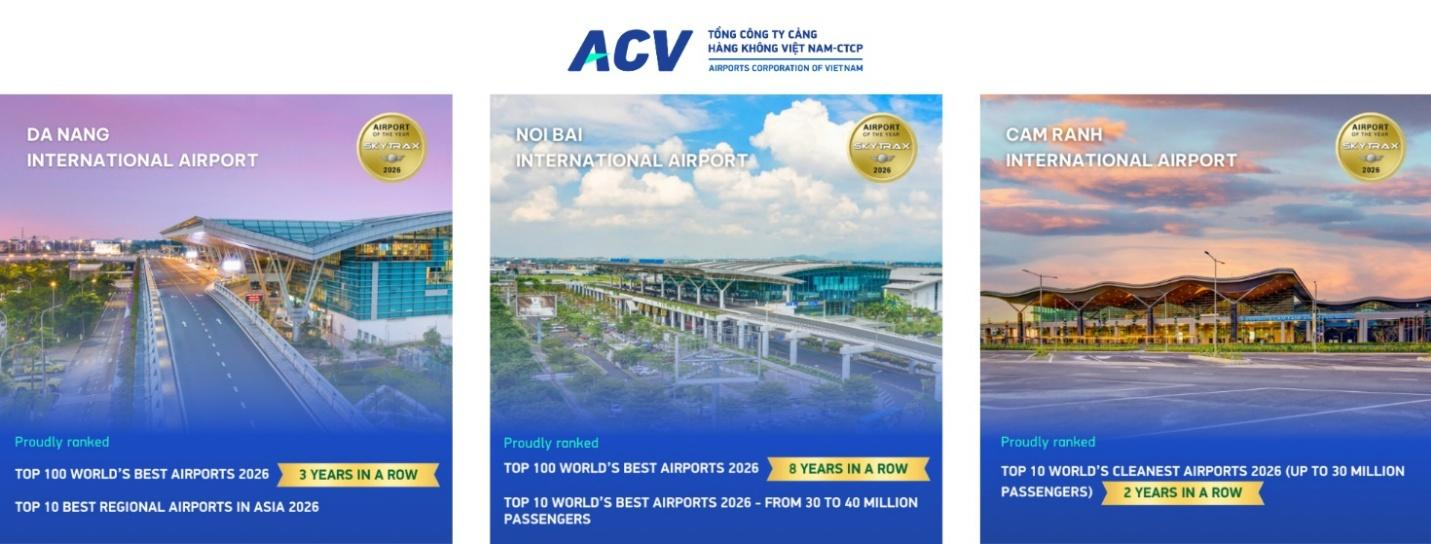
Airports affiliated with ACV achieved outstanding results in the 2026 Skytrax rankings
Domestically, ACV’s brand is equally compelling. A series of prestigious recognitions, including Top 30 Strategic Investment Corporations (ALPHA30), Top 50 Most Reputable and Efficient Public Companies, and Top 20 Enterprises with Outstanding Corporate Culture, underscore the Corporation’s credibility and enduring value. Notably, ACV has sustained its presence among the Top 10 Famous Vietnamese Brands for six consecutive years. These achievements are not incidental; they are built upon a culture of discipline, integrity and the unwavering dedication of thousands of employees. In recognition of these contributions, ACV has been honored with distinguished state awards, affirming both its institutional strength and its social responsibility.
A growth portrait defined by impressive metrics
What truly defines ACV’s 2025 impression is the harmony between growth and efficiency. The Corporation served over 120.3 million passengers, marking a 9.4% increase year-on-year and surpassing planned targets. International passenger traffic surged by 14% to 47.1 million passengers, while domestic traffic increased by 7% to 73.3 million passengers. Cargo throughput reached 1.775 million tons, marking a 15% year-on-year increase and surpassing the planned target by 13%. In particular, international cargo volume rose sharply by 22%, reinforcing the growing role of Vietnam’s airport network in the global logistics chain. Total aircraft movements reached 737,000 take-offs and landings, up 10% from the previous year, equivalent to the safe operation of more than 2,000 flights per day across the network.
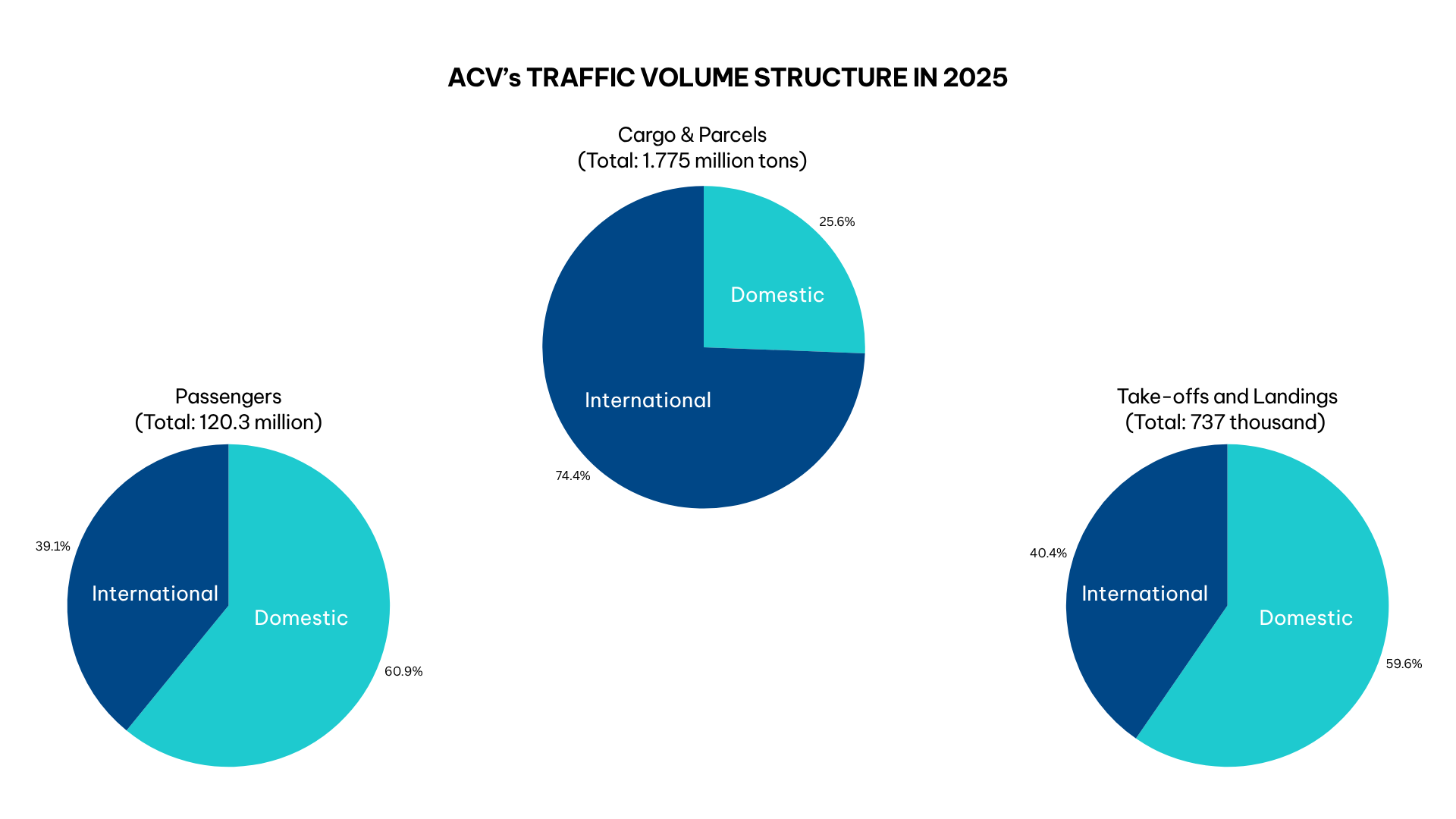
Traffic volume through ACV's airport network in 2025
Financially, ACV demonstrates a rare balance of growth and sustainability. Revenue reached VND 24,534 billion, while pre-tax profit exceeded expectations by 28%, achieving VND 13,472 billion, while net profit margin remained at a strong 51.10%. By the end of 2025, Airports Corporation of Vietnam’s total assets had increased by 18.89% to VND 90.948 trillion. Profitability indicators remained solid, with ROA reaching 13% and ROE at 16.98%. Notably, the expansion of charter capital to VND 35.828 trillion further empowers the Corporation to undertake transformative national projects, most particularly Long Thanh International Airport, a symbol of Vietnam’s aviation future.
Shaping a new landscape through strategic projects
2025 also marked a breakthrough year for infrastructure development at ACV, with approved investment capital reaching VND 39.828 trillion and disbursement achieving VND 38.234 trillion, equivalent to 96% of the planned target.
The most significant national infrastructure project was Phase 1 of Long Thanh International Airport (Component Project 3). After more than two years of construction amid complex technical and logistical challenges, the airport successfully welcomed its first technical flight on December 15, 2025. Just four days later, on December 19, 2025, the first commercial passenger flight officially landed, marking a historic milestone for Vietnam’s aviation sector. The project is expected to be completed by the end of 2026.
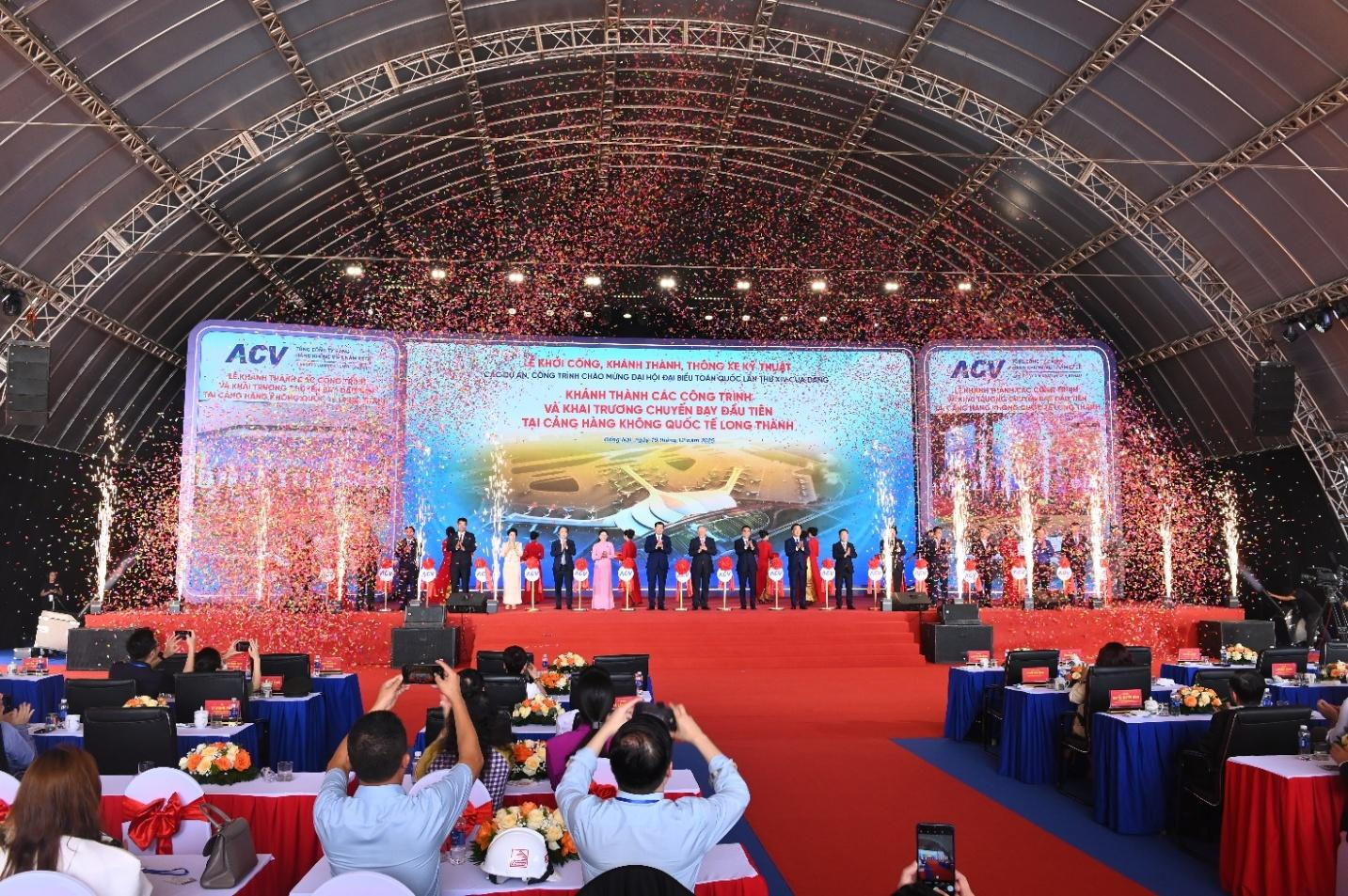
The inauguration ceremony of facilities and projects, alongside the launch of the first flight at Long Thanh International Airport
At Tan Son Nhat International Airport, Passenger Terminal T3 officially commenced operations on April 19, 2025, contributing to easing infrastructure pressure and enhancing passenger experience at Vietnam’s busiest airport. Meanwhile, the expansion project of Passenger Terminal T2 at Noi Bai International Airport was completed and put into operation in December 2025, significantly improving service capacity for the northern gateway.
In parallel, ACV accelerated a series of key airport projects nationwide, including the groundbreaking of Terminal T2 at Dong Hoi Airport and Cat Bi International Airport, the expansion and upgrade of Ca Mau Airport, and the commencement of the cargo terminal project at Da Nang International Airport. These developments reflect ACV’s strategy of synchronized and balanced infrastructure expansion to meet the rapidly growing demand for air transport across Vietnam.
Digital transformation enhancing operations and passenger experience
Yet, beyond physical expansion, ACV’s transformation is equally driven by intelligence and innovation. Digitalization is no longer an ambition, it is an operational reality. The successful deployment of core platforms such as iCUTE, AODB, and the implementation of Airport Collaborative Decision Making (A-CDM) at Noi Bai International Airport and Tan Son Nhat International Airport has significantly enhanced operational efficiency, optimized flight operations, reduced processing time, improved fuel efficiency, and minimized emissions across the network.
Building on this foundation, ACV has become a pioneer in deploying biometric authentication integrated with VNeID at 100% of its airports, enabling passengers to experience a fully contactless journey. Combined with electronic toll collection (ETC) systems and other digital operational solutions, passenger movement from airport entry gates to boarding areas is becoming increasingly seamless, convenient, and modern.

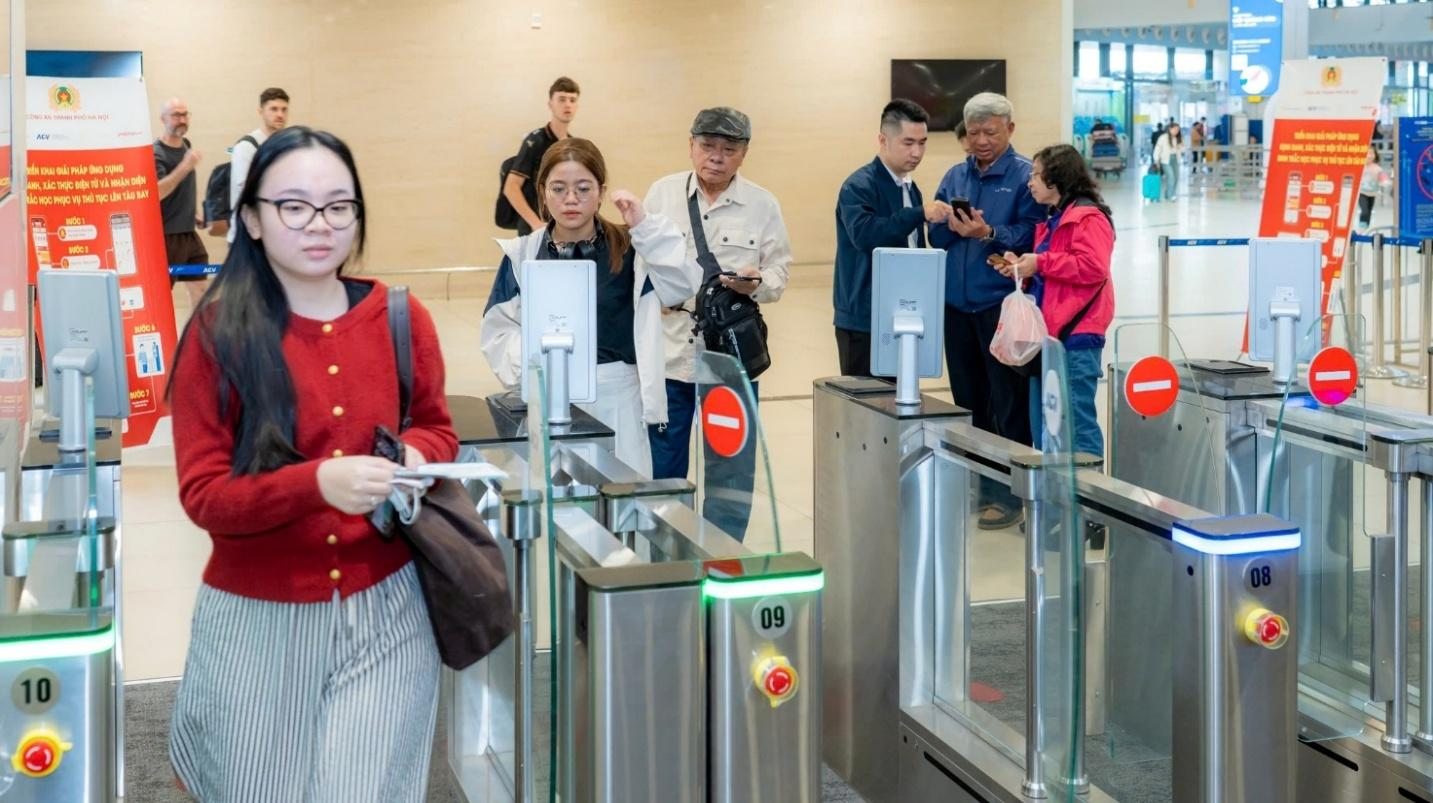
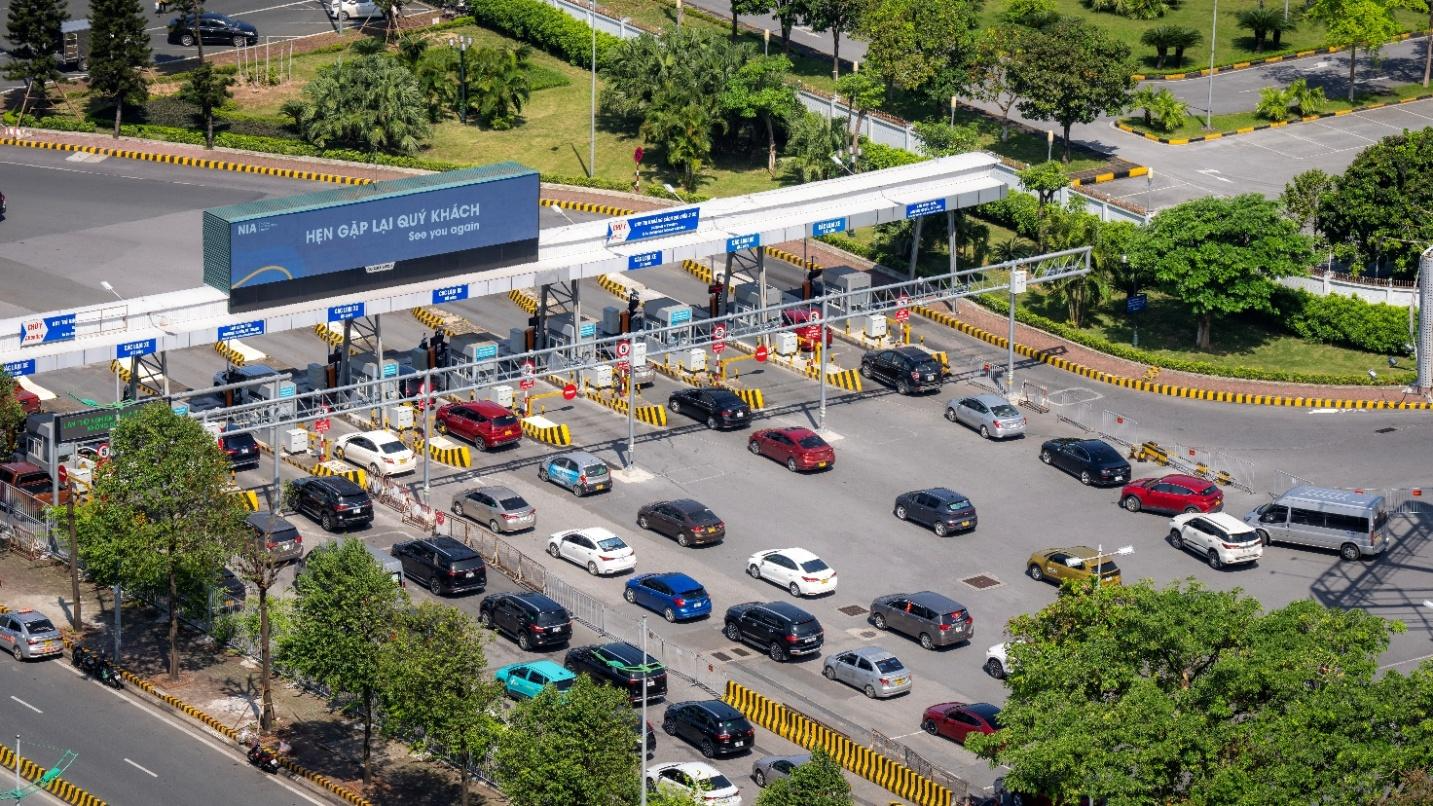
A synchronized technological ecosystem and biometric authentication applications delivering a smart, seamless, and "touchless" experience for all passengers
At the heart of this transformation lies an uncompromising commitment to safety. Surpassing global benchmarks set by the International Civil Aviation Organization (ICAO), ACV’s safety performance ranks among the leading systems in Asia. The achievement of ISAGO certification from the International Air Transport Association (IATA) further solidifies its adherence to the highest international standards. Safety, for ACV, is not a requirement, it is a promise, embedded in every operation, every process, and every journey.
Sustainable development rooted in shared values
Equally profound is ACV’s vision for sustainable development. The Corporation recognizes that growth must be inclusive, responsible, and forward-looking. In 2025, ACV contributed more than VND 6 billion to social welfare programs supporting disadvantaged communities, education initiatives, and disaster relief efforts nationwide. More than 1,600 employees also joined the corporation’s blood donation campaign, sharing thousands of life-saving donations with the community.
Committed to sustainable development, ACV continues to accelerate green airport initiatives across its network through energy-saving and emission-reduction solutions, including LED standardization, smart automation systems, reduced APU usage, Fuel Hydrant Systems (FHS), and Ground Power Units (GPU).
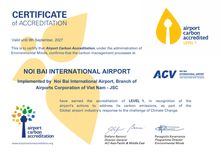
At the same time, ACV is steadily advancing its renewable energy roadmap with the introduction of solar power standards at airports, while developing a comprehensive ESG strategy and piloting Airport Carbon Accreditation certification, reaffirming its commitment toward Net Zero emissions by 2050 and a greener future for Vietnam’s aviation industry.
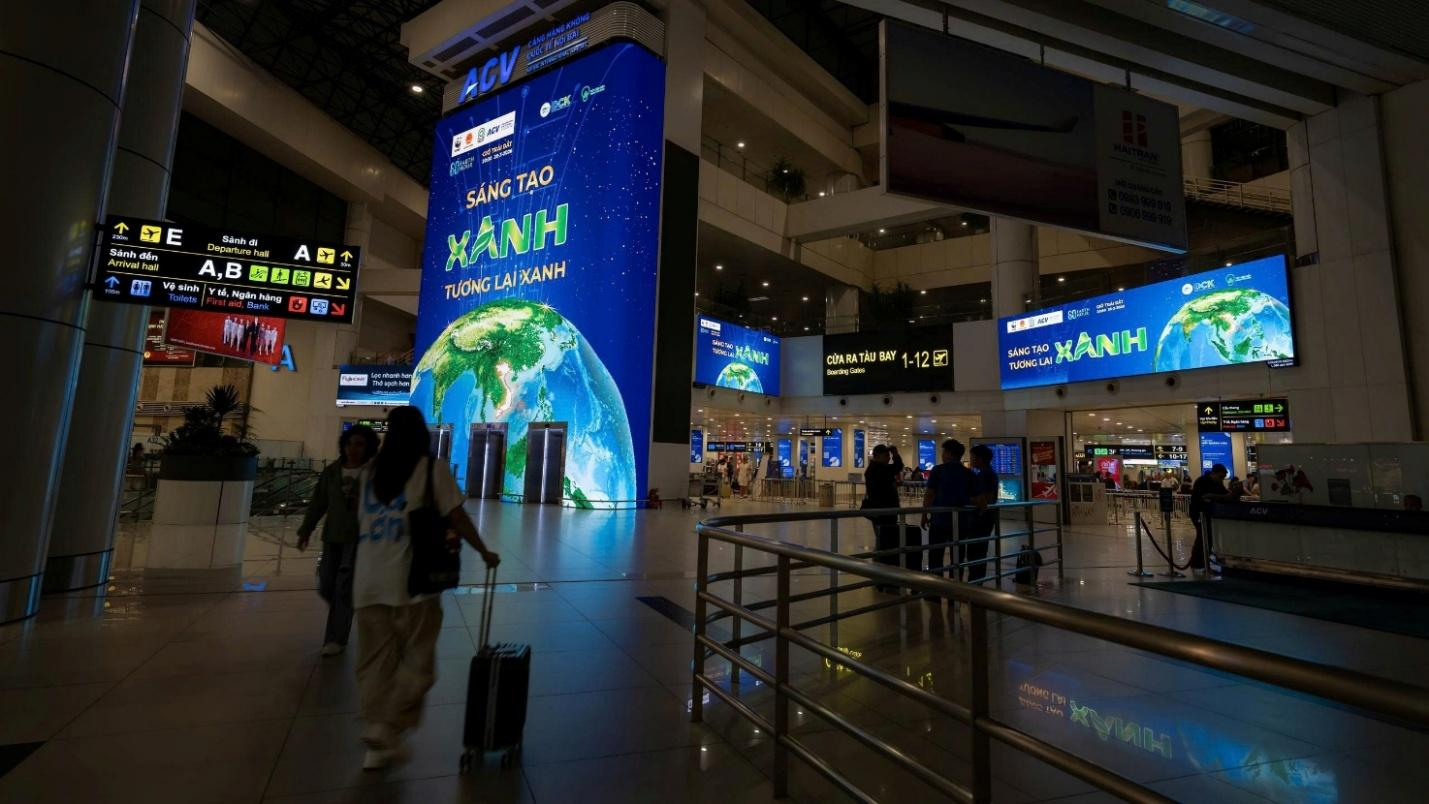
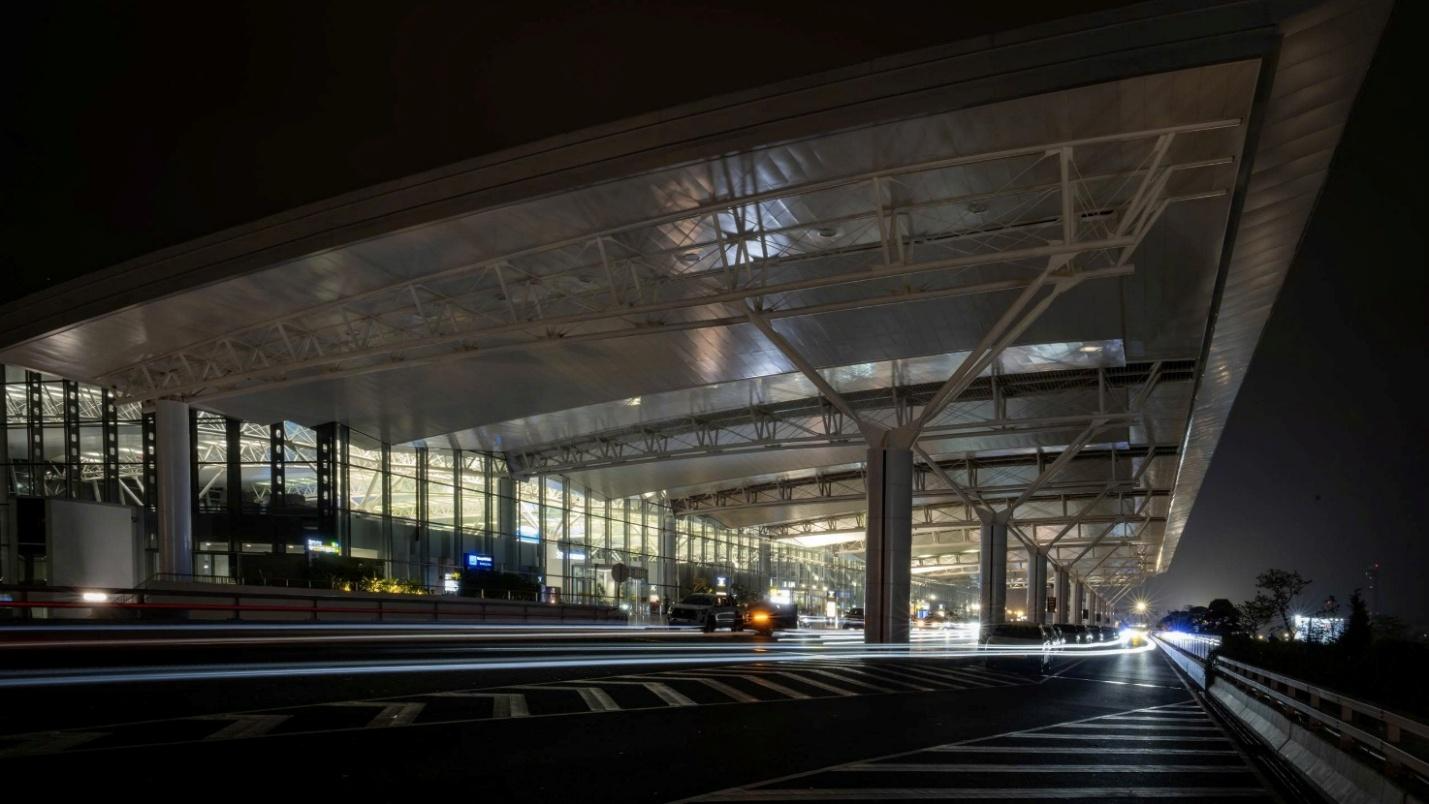
Noi Bai International Airport recorded an impressive energy saving of 4,800 kWh in just 1 hour in observance of Earth Hour 2026 on March 28, 2026
A landmark moment in 2025 is ACV’s deeper integration into the global aviation community, marked by its participation in the ACI World Governing Board. This is more than recognition, it is an invitation for ACV to contribute to shaping the future of global aviation, bringing Vietnam’s perspective to the world stage.
Corporate culture: the enduring strength behind sustainable growth
Guided by the spirit of “Unity – Discipline – Safety – Innovation – Integration,” ACV continues to foster a professional, united, and responsible organization, the foundation that drives its sustainable growth journey.
In 2025, ACV successfully organized the 3rd Party Congress for the 2025–2030 term, marking an important milestone that shaped the corporation’s strategic vision for a new stage of development, with the ambition of becoming a leading airport operator in the region.
Behind every on-time departure and every seamless passenger experience are more than 10,600 dedicated employees working tirelessly with professionalism, responsibility, and pride. ACV believes that no infrastructure or technology can replace the value of people. Therefore, continuous investment in human capital remains a top priority, through advanced training programs, language standardization, and regular international-standard training aligned with ICAO and IATA standards, nurturing the next generation that will lead ACV further onto the global stage.
The journey ahead is not defined solely by scale or speed, but by purpose. Each airport is more than a terminal, it is a gateway of connection. Each flight is more than a movement, it is a bridge of opportunity. With a foundation forged through resilience and a vision guided by innovation and integration, ACV is steadily ascending, positioning Vietnam as a dynamic aviation hub, ready to stand alongside the world’s most advanced and connected nations.
ACV – The Hub to Dynamic Vietnam