Đang tải...
Vui lòng chờ trong giây lát
Đang tải...
Vui lòng chờ trong giây lát
Đang tải...
Vui lòng chờ trong giây lát

In the 2025 Air Connectivity Index Report released by Airports Council International Asia-Pacific & Middle East (ACI APAC & MID) on 7 September 2026, three of ACV's biggest gateways — Tan Son Nhat, Noi Bai and Da Nang International Airports — were recognized among the airports posting the most notable connectivity improvements within their respective passenger-volume segments. The recognition comes as air connectivity across Asia-Pacific continues on a positive growth trajectory.
Asia-Pacific Air Connectivity Grows 10% in 2025
ACI's Air Connectivity Index is a passenger-centric analytical tool that measures airport connectivity based on network scale and frequency and the economic weight of destinations served. The index also factors in connection quality and efficiency through elements such as aircraft type, whether a route is domestic or international, the number of transits stops, and the extent of airline-alliance participation.
According to the index, air connectivity in Asia-Pacific grew 10% in 2025. Across Asia-Pacific and the Middle East combined, growth reached 11%, with the Middle East alone posting 21%, a sign that the region's aviation industry is entering a new growth phase following a strong post-pandemic recovery. Of the 315 airports assessed, 74% recorded connectivity growth in 2025; major hub airports continued to lead, with 83–97% of large hubs posting growth on the back of expanding airline networks and sustained international travel demand. Notably, Asia-Pacific's 10% growth in 2025 was below the 14% recorded in 2024, according to ACI, this moderation reflects the region's shift from a strong post-pandemic rebound toward a more sustainable growth trajectory.
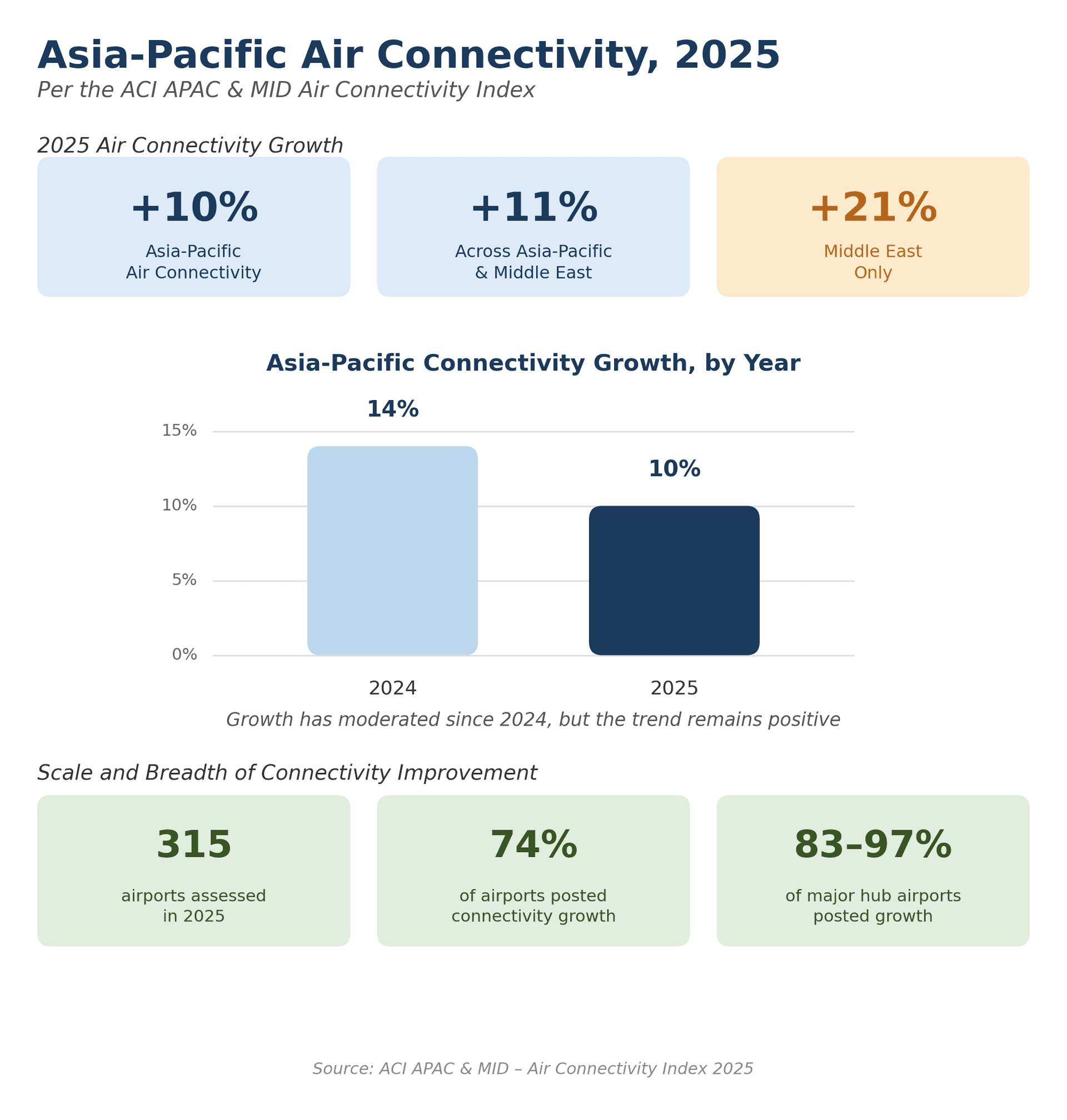
The ACI APAC & MID 2025 Air Connectivity Index shows 74% of the region's airports sustaining positive growth, led by major hub airports
Tan Son Nhat, Noi Bai and Da Nang Stand Out for Connectivity Improvement
Amid the region's broader growth, Vietnam's airport system continues to make its mark on connectivity improvement. Under ACI's classification, Noi Bai and Tan Son Nhat International Airports were named among the airports with the most notable connectivity improvement in the 25–40 million-passenger-a-year segment, while Da Nang International Airport was recognized in the 5–15 million-passenger-a-year segment.
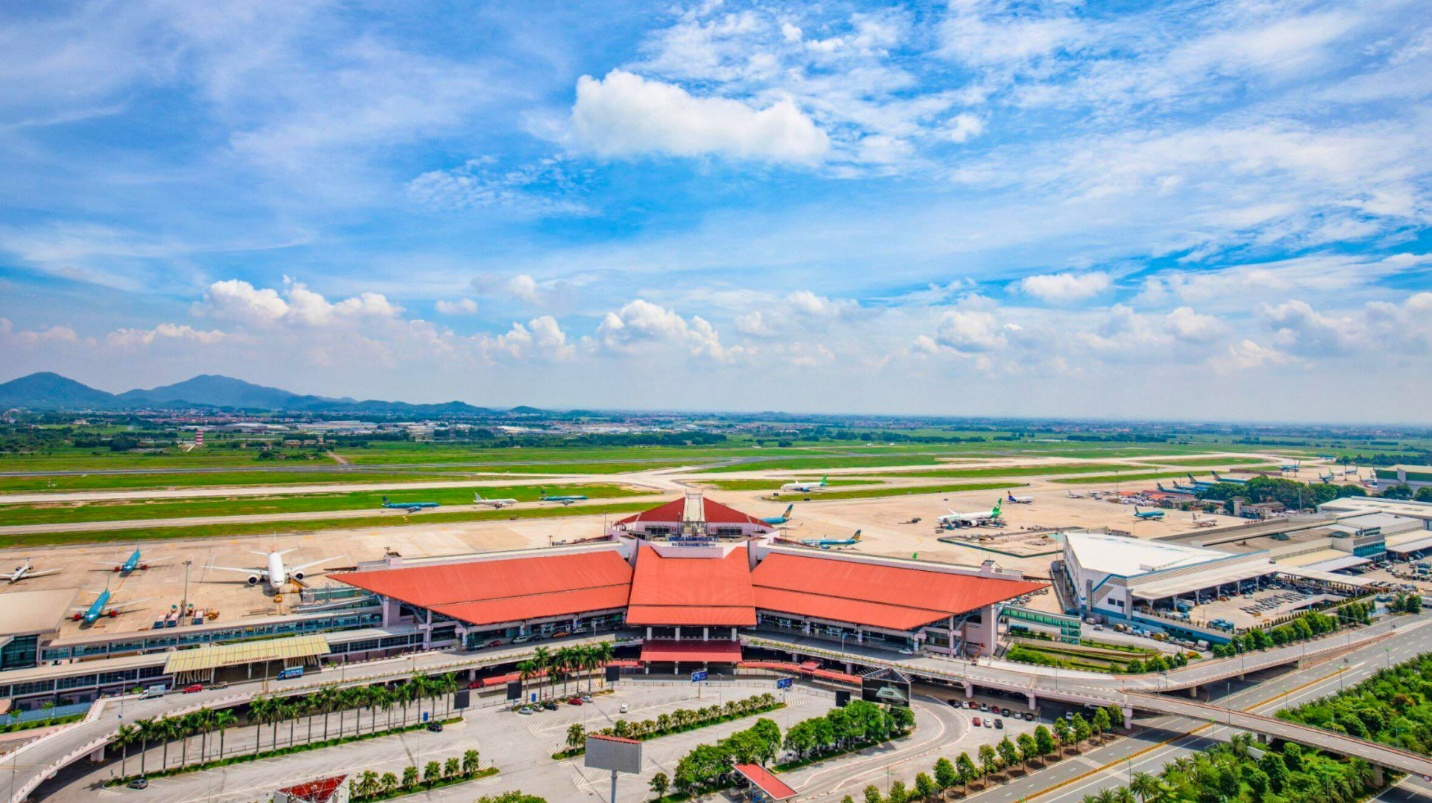
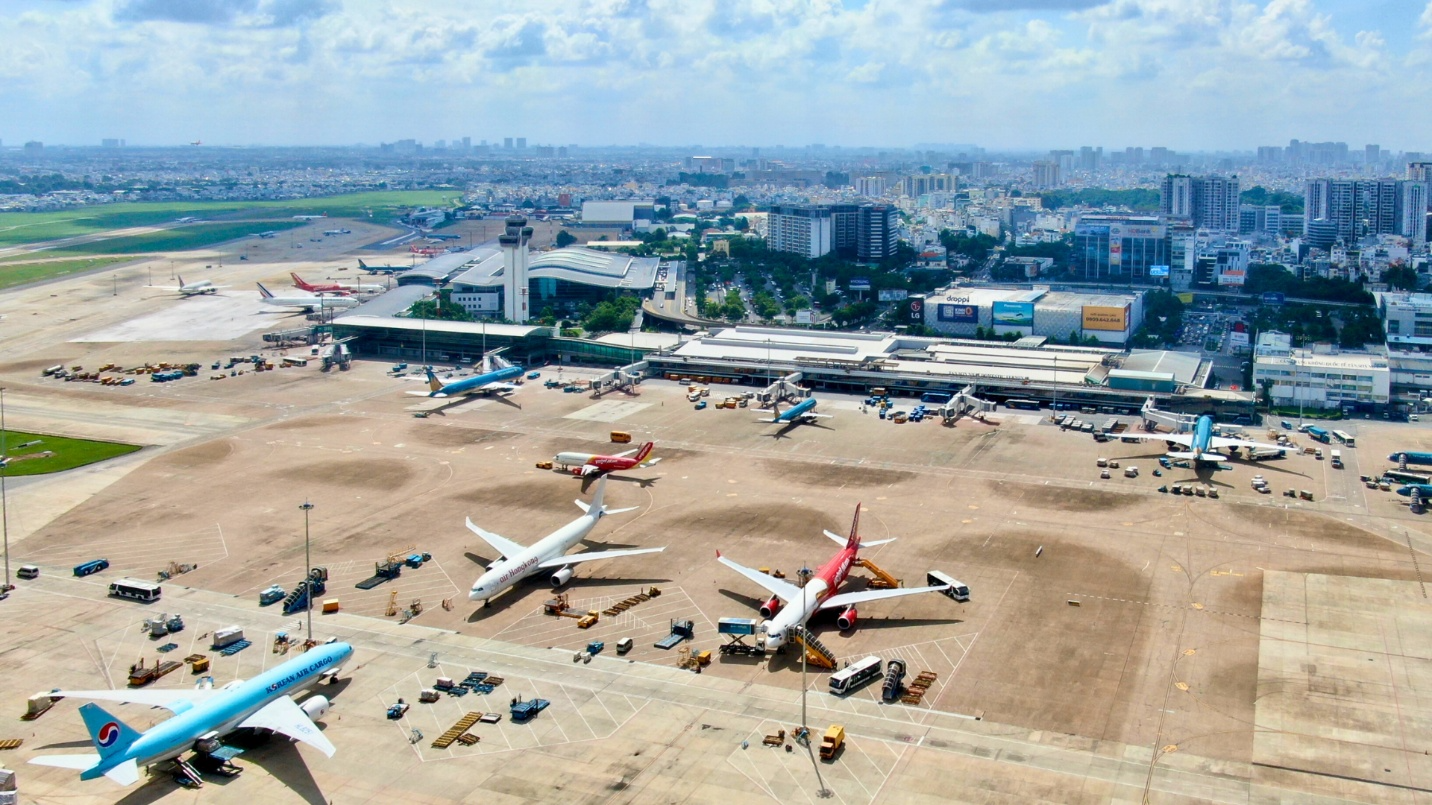

Noi Bai, Tan Son Nhat and Da Nang International Airports rank among the region's leading airports for connectivity improvement
The fact that all three airports rank among the leading groups for connectivity improvement within their respective size segments is a positive signal that affirms the standing of Vietnam's airport system within the region's aviation network. These are all key gateways connecting Vietnam's major economic and tourism centers with regional and international flight networks. The improved connectivity at these three airports helps strengthen Vietnam's air accessibility while creating more favorable conditions for trade, tourism, and socio-economic development.
Regional Air Network Continues to Expand
ACI's data also shows that Asia-Pacific's connectivity growth momentum is broad-based. In 2025, intra-regional traffic continued to account for 91% of the region's total departing passengers, up 5% from 2024 and 5% above 2019 levels. Intercontinental traffic originating from Asia-Pacific grew 7% year on year and is now 12% above pre-pandemic levels; traffic to Europe, the Middle East, Central and South America, and Africa has all surpassed pre-pandemic levels, while traffic to North America remains 9% below 2019.
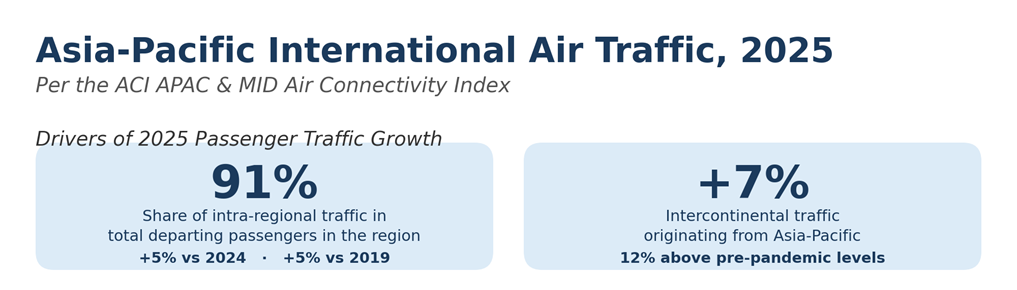
Asia-Pacific's international network continues to expand strongly, with most 2025 intercontinental traffic already surpassing pre-pandemic levels
These trends suggest that Asia-Pacific aviation is moving from post-pandemic recovery into a longer-term growth phase, in which expanding route networks, strengthening hub connectivity, and improving operational efficiency remain key drivers. With passenger volumes across Asia-Pacific and the Middle East projected to reach 11 billion within the next three decades, the need to strengthen connectivity capacity and system resilience is becoming increasingly urgent.
Alongside capacity expansion, ACI stresses that airports should focus on making better use of existing capacity, strengthening operational reliability, improving the passenger experience, and investing in infrastructure and technology, priorities that carry growing weight as the region's aviation market enters a new growth cycle. For Vietnam, rising demand for international connectivity calls for simultaneous progress in airport infrastructure capacity, service quality, and the system's long-term ability to keep pace with demand.

Long Thanh International Airport, expected to begin commercial operations by the end of 2026, is set to lift Vietnam's air-connectivity capacity to a new level
As the enterprise responsible for managing, investing in, and operating Vietnam's largest airport system, Airports Corporation of Vietnam (ACV) continues to focus on strengthening infrastructure capacity, service quality, and operational efficiency across its network, while carrying out large-scale investment projects to meet the growing demands of the aviation market. ACI's assessment of Tan Son Nhat, Noi Bai and Da Nang is an encouraging recognition that helps affirm ACV's standing within Asia-Pacific's expanding air-connectivity landscape. Notably, by the end of 2026 ACV's network will welcome a new member into the region's air-connectivity race, as Long Thanh International Airport, a key national infrastructure project, officially begins operations, opening significant room to elevate Vietnam's air-connectivity standing across Asia-Pacific and the world.