Đang tải...
Vui lòng chờ trong giây lát
Đang tải...
Vui lòng chờ trong giây lát
Đang tải...
Vui lòng chờ trong giây lát

On October 20, 2026, Airports Corporation of Vietnam (ACV) participated in a working session with leaders of Hue City to review the operational performance of Phu Bai International Airport during the first nine months of 2026, discuss solutions to promote tourism in conjunction with aviation development, and exchange views on airport planning, the proposed development of a second runway, passenger terminal upgrades, and measures to enhance the airport’s service capacity in the coming years.
Representing ACV at the meeting were Mr. Nguyen Cao Cuong, Chairman of the Board of Directors; Mr. Nguyen Duc Hung, Acting General Director; Ms. Nguyen Thi Hong Phuong, Member of the Board of Directors; and Mr. Tran Anh Vu, Deputy General Director, together with leaders of relevant professional units, representatives of Phu Bai International Airport, and other related units. Hue City was represented by Mr. Trinh Manh Linh, Standing Deputy Secretary of the Hue City Party Committee; Mr. Hoang Hai Minh, Standing Vice Chairman of the Hue City People’s Committee; and Mr. Tran Huu Thuy Giang, Vice Chairman of the Hue City People’s Committee, alongside representatives of relevant departments and agencies.
Building on the city’s development orientations, the two sides discussed a range of solutions to maximize the effectiveness of existing infrastructure, improve service quality, and establish a foundation for the airport’s long-term development.

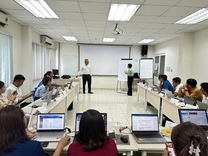
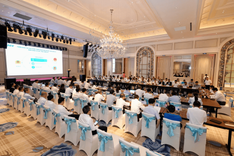
Overview of the working session.
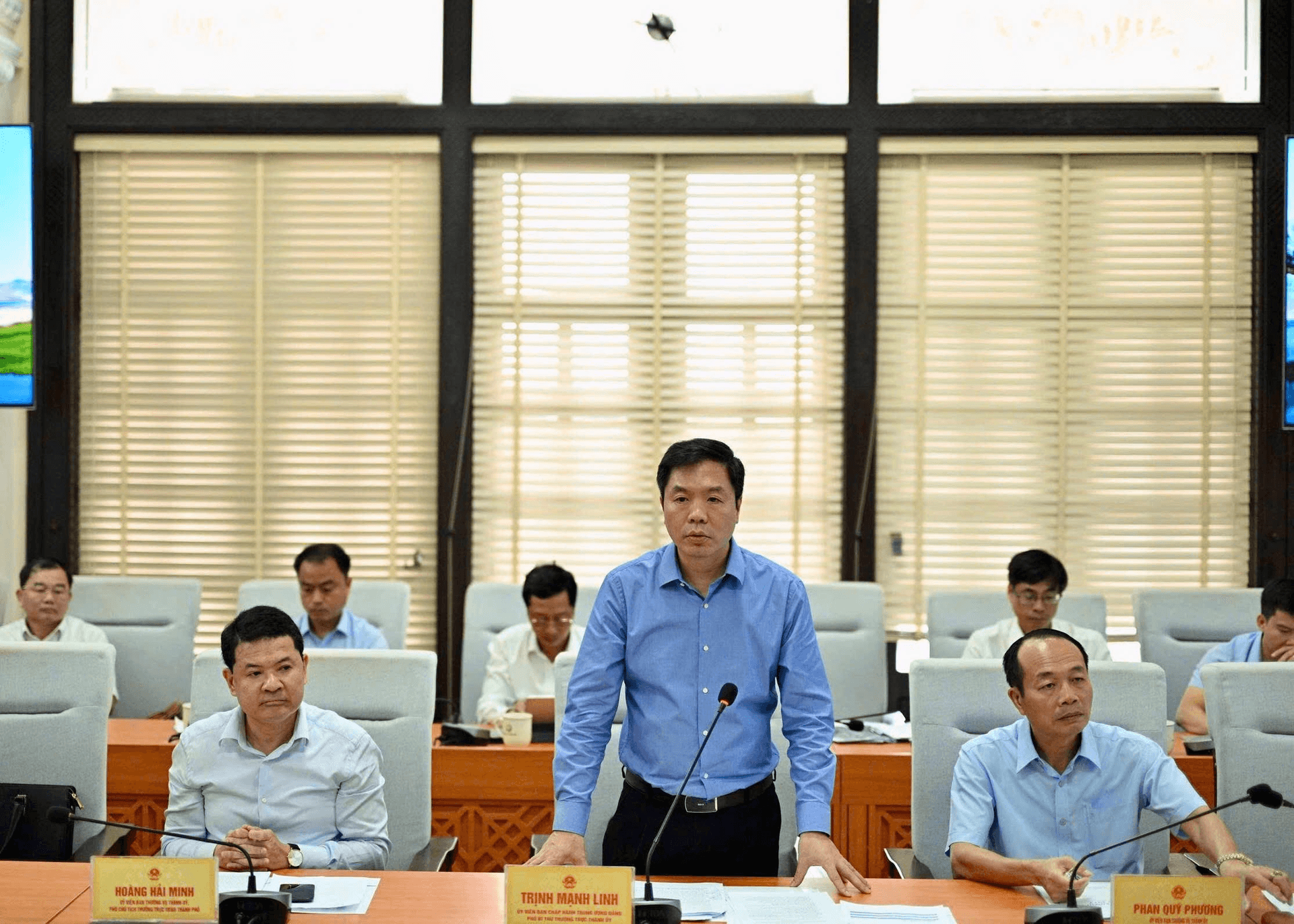
Mr. Trinh Manh Linh, Standing Deputy Secretary of the Hue City Party Committee, delivering the opening remarks.
Coordinating Airport Planning to Establish a Long-Term Foundation for Development
In line with Hue City’s development orientations and long-term air transport demand, the city proposed that ACV coordinate in reviewing and finalizing the master plan for Phu Bai International Airport. The plan is expected to align with the city’s socioeconomic development objectives, air transport demand, and the national airport system master plan. This work will provide an important basis for determining the scale, implementation roadmap, and investment priorities for airport infrastructure in the coming years.
Under Decision No. 1140/QD-BXD dated July 1, 2026, Phu Bai International Airport is planned to reach an annual capacity of approximately 4 million passengers by 2030 and 12 million passengers by 2050. At the meeting, Hue City proposed reviewing and adjusting the airport’s design capacity for 2030 to approximately 7 million passengers annually. The city also recommended prioritizing investment in a second runway and a synchronized taxiway system before 2030.
ACV highly appreciated Hue City’s planning efforts and economic development orientations. The corporation will continue coordinating with the city and relevant authorities to review planning matters, discuss investment options, and explore solutions to address challenges related to administrative procedures, funding, and airport infrastructure development.
In addition to the overall airport master plan, ACV is also studying ways to enhance passenger terminal capacity. According to the information presented at the meeting, Terminal T1 has a designed capacity of approximately 1.5 million passengers per year, while Terminal T2 is designed to accommodate 5 million passengers annually.
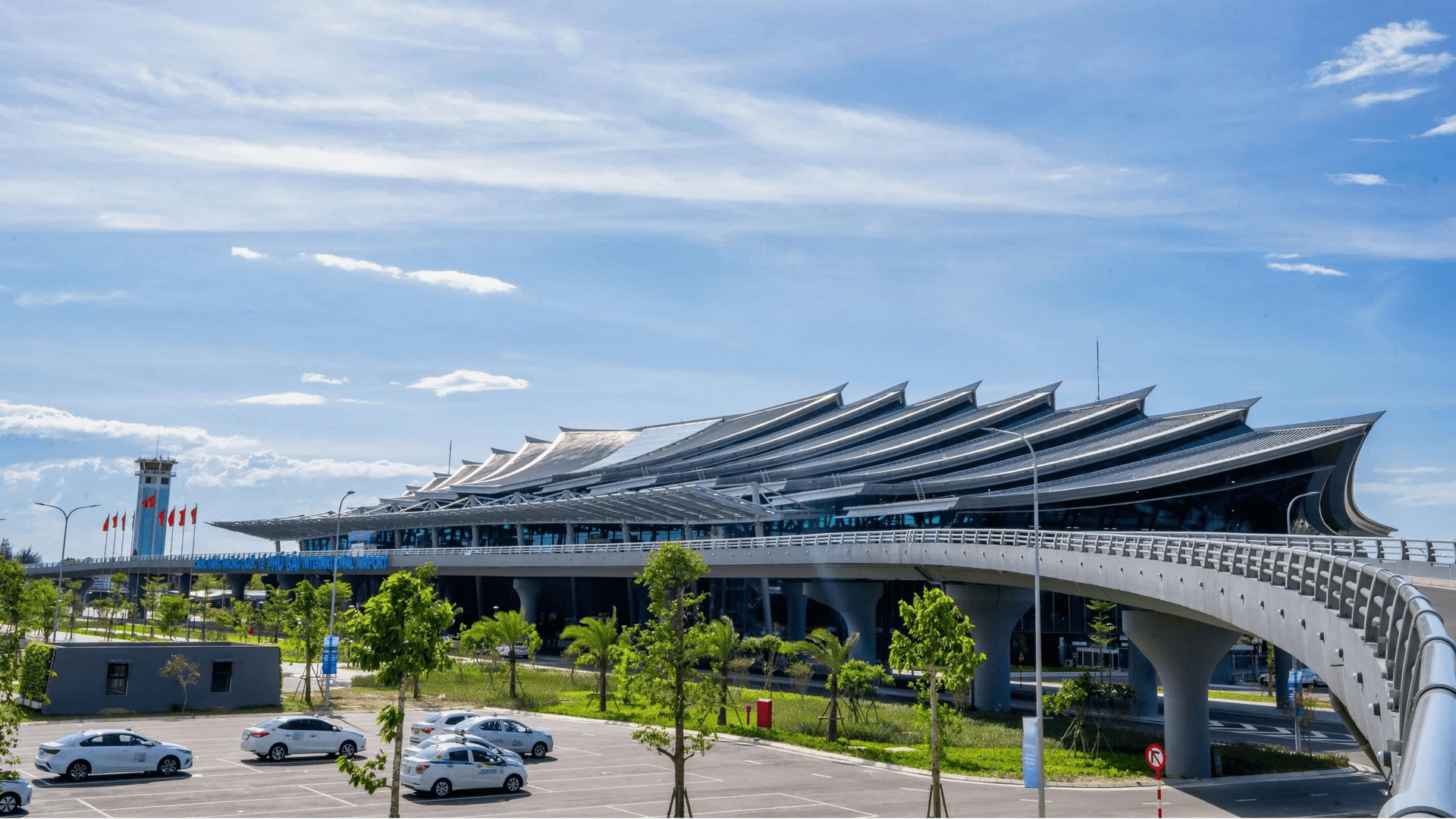
Terminal T2 at Phu Bai International Airport.
Prioritizing Preparations for Investment in a Second Runway
Building on the proposed planning orientations, Hue City recommended accelerating the review and completion of procedures related to the investment policy for a second runway at Phu Bai International Airport, with the aim of meeting the airport’s long-term operational and development requirements.
Regarding this proposal, Mr. Nguyen Cao Cuong, Chairman of ACV’s Board of Directors, stated that ACV wished to work closely with relevant authorities to review and complete the necessary procedures and progressively study appropriate investment options, ensuring proactive preparations for the airport’s future development needs.
Based on a review of the current status of asset and infrastructure management at the airport, together with applicable regulations, ACV will continue discussions with the Ministry of Construction and relevant authorities to clarify outstanding matters and identify an appropriate implementation approach.
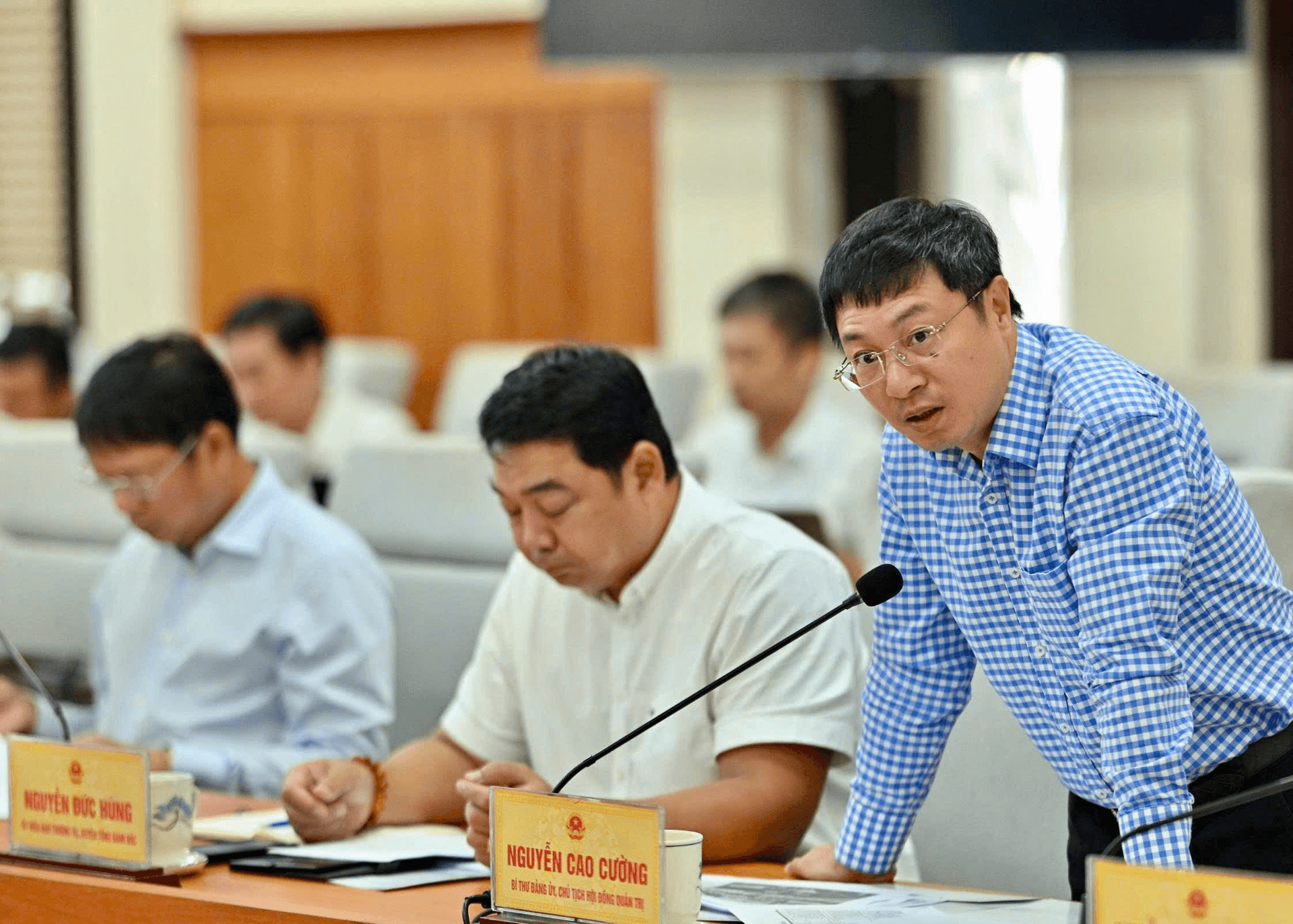
Mr. Nguyen Cao Cuong, Chairman of ACV’s Board of Directors, speaking at the working session.
Coordinating Market Development and Promoting Trade and Tourism
With its rich cultural heritage, historic sites, distinctive landscapes, and unique culinary traditions, Hue has significant potential to expand its visitor markets, particularly international tourism. Phu Bai International Airport serves as a key aviation gateway connecting the city with domestic and international economic and tourism centers, thereby contributing to trade, commerce, and service-sector development.
Mr. Nguyen Duc Hung, Acting General Director of ACV, emphasized that regional airports not only meet travel demand but also play an important role in promoting economic growth, tourism, and commercial connectivity.
On this basis, ACV aims to strengthen coordination with Hue City and airlines to explore appropriate support measures to attract carriers, introduce new air routes, increase flight frequencies, and boost passenger traffic.
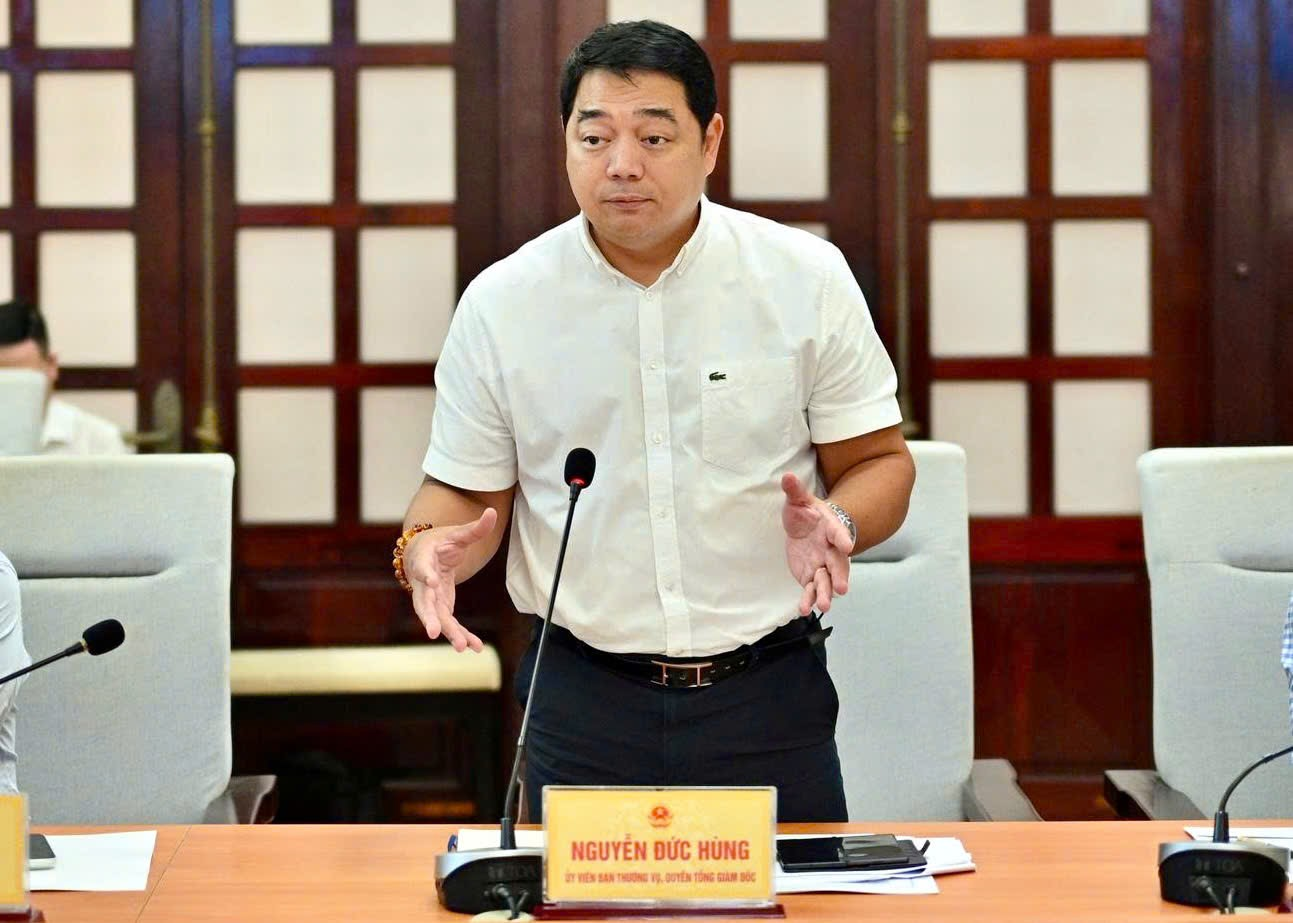
Mr. Nguyen Duc Hung, Acting General Director of ACV, sharing orientations for market development and trade and tourism promotion.
Hue City proposed that ACV take the lead, in coordination with the city, airlines, and travel businesses, in studying opportunities to establish scheduled international services and charter flights. Initial target markets include the Republic of Korea, China, Taiwan, and Thailand.
Destination marketing, tourism product development, and air route promotion will be explored through an integrated approach to strengthen their mutual effectiveness, improve airport operations, and support the sustainable development of Hue’s aviation market.
Advancing Digital Transformation, Airport Landscaping, and Service Quality Towards a Smart City–Airport Connection
Discussing digital transformation, Mr. Nguyen Cao Cuong commended the efforts of Hue City and Phu Bai International Airport in implementing services such as self-service kiosks and automated border control gates. He noted that stronger connectivity and data sharing between ACV and the local authorities could create additional opportunities to enhance passenger engagement, provide useful information, and promote Hue’s image and tourism destinations.
ACV continues to prioritize the modernization of airport operations through digital transformation, including research into biometric technologies, artificial intelligence, and solutions to optimize passenger service processes. These initiatives aim to improve operational efficiency, enhance the passenger experience, and progressively advance the development of smart airports.
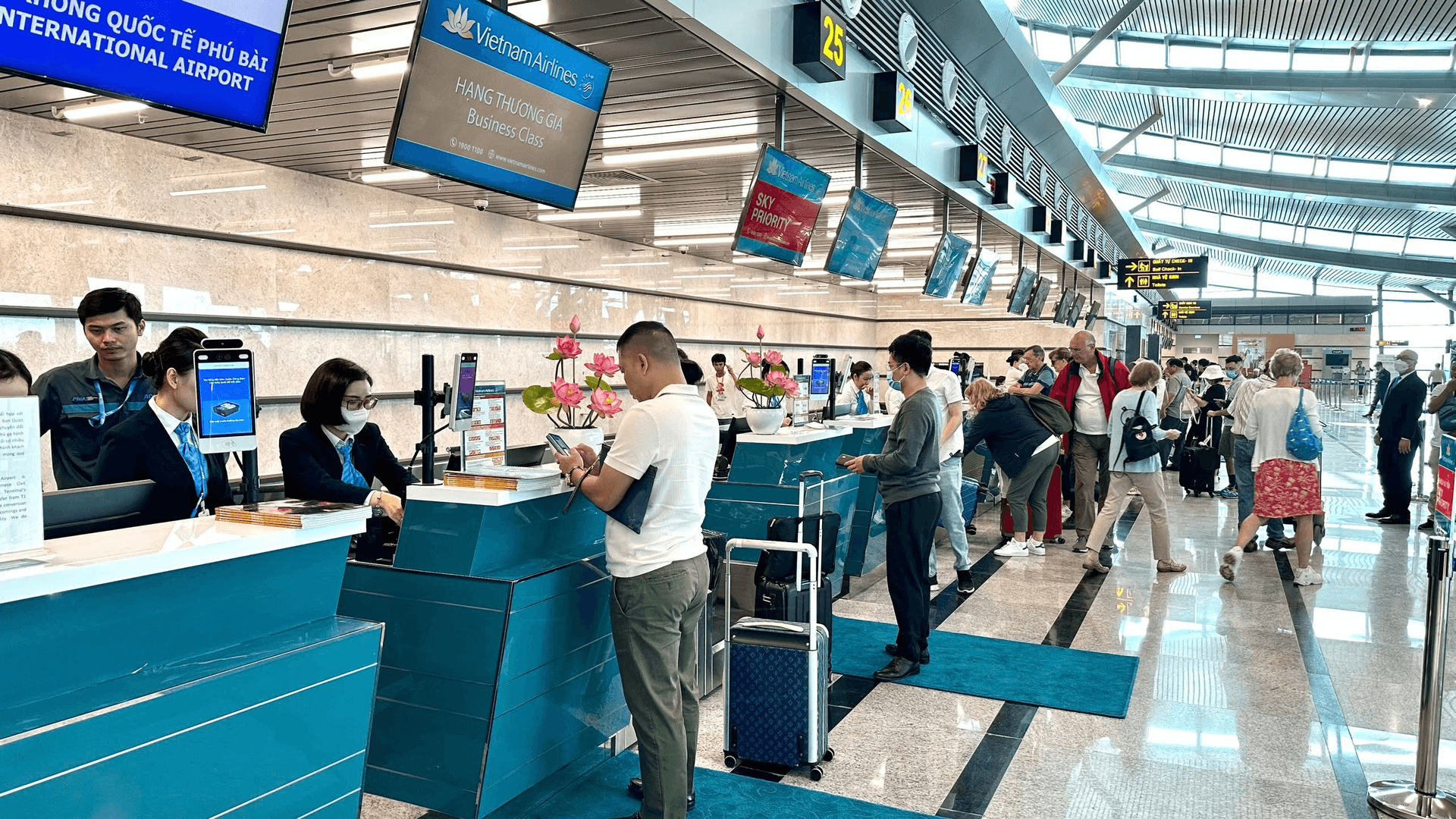
Applying modern technologies to airport operations to enhance passenger service quality.
ACV also stated that it would continue coordinating with local authorities, within the respective functions, responsibilities, and management mandates of each party, to study and implement appropriate solutions to improve the airport’s landscape and surrounding environment.
Landscape enhancement forms part of a broader effort to improve service quality and the passenger experience while reflecting Hue’s identity as a destination renowned for its historical, cultural, and heritage values.
Coordinating Improvements to Transport Connectivity Infrastructure
Regarding transport connectivity and passenger convenience, Hue City proposed working with ACV to study and develop appropriate solutions, including the deployment of automated control gates (AutoGate), to improve service quality and the overall travel experience at Phu Bai International Airport.
ACV will continue consulting with relevant units to explore solutions that are appropriate to existing infrastructure, technical requirements, operational procedures, and the respective management responsibilities of the agencies involved.
For Hue, a city distinguished by its rich history, culture, and heritage, Phu Bai International Airport is more than a major transport hub. It also serves as an important gateway for promoting the image of the former imperial capital, expanding opportunities for cultural exchange and cooperation, and attracting domestic and international visitors.
Strengthening cooperation between ACV and Hue City, while coordinating the development of aviation infrastructure with market promotion and digital transformation, will help establish a solid foundation for the sustainable development of Phu Bai International Airport. These efforts are also expected to contribute positively to the city’s socioeconomic growth and the development of Vietnam’s national aviation network.